
One typical summer weekend afternoon, I was having a relaxing brunch with some close friends at my neighborhood’s outdoor cafe in NYC. I casually asked one friend “How is your mother doing these days?” My friend took a quick breath and told us, “My mother in Spain is doing fine but her concern is the current state of Spain. I, too, can’t believe how bad it recently has become” She was clearly upset and explained how her Spain friends’ Facebook updates have described their lives have gotten worse and worse and been turned upside down.
After Spain went through the Franco’s dictatorship, people of Spain finally gained freedom just a few decades ago. I can imagine how desperate her mother and friends in Spain must feel about the country falling apart now. Listening to her, I thought of my friends and family in Japan, who are going through a big shift right now, and wondered how we all got here.
As a result of greed and lack of accountability in a small segment of population or, approximately1% , we have recently experienced a financial crisis and recession that we have never seen before in history. The crisis just started in one country and one sector, but it has had a huge impact across the globe. The globalized economy is clearly at a crossroads.
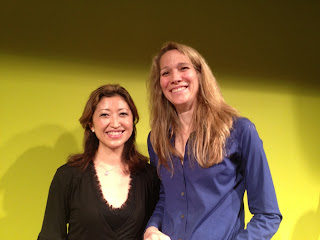
- Real Food Works founder Lucinda Duncalfe (right) and me
During a recent interview, Lucinda Duncalfe, the serial entrepreneur, award winning professional and founder of Real Food Works, mentioned that she was first inspired by Forks Over Knives, a documentary describing how a plant-based diet will prevent most degenerative diseases. Her new venture delivers plant-based foods prepared by independent local chefs to subscribed clients, and her goal is to create happiness and more energy in her clients’ lives.
I also recently attended a meeting for “food+tech”, a Meetup group whose purpose is to harness Web-based tools to communicate about food, provide information about food in a new and meaningful way. At the meeting, a group of great innovators in food distribution were introduced to over 70 attendees. Here are some things I learned about some of the new start-ups out there:
- Relay Foods is disrupting the largest retail category – groceries, while also efficiently connecting farm and fork.
- Appetude is a social network that lets users discover, share, and order dishes online.
- FarmersWeb is an online marketplace where wholesale buyers can connect and transact with local farms.
- Wholeshare helps people get access to good quality, affordable local food by organizing group purchases.
Through their new businesses and innovations, we – consumers – are able to develop a local community and re-create the connection with food sources — they help us “relocalize.” Because of the way we eat, we have destroyed our connection with the community, with the natural processes, with those who grow our food, and with the essence of life. Our awareness, facing a daunting predicament with the way we’re producing and consuming our food, actually has inspired some of us to create these new businesses.
In short, we must learn how to eat seasonally and locally. We must develop new skills and knowledge — composting, cooking, sharing, creating communities, and relocalizing.
What do you think about local food? What is your view on the huge shift in the world?
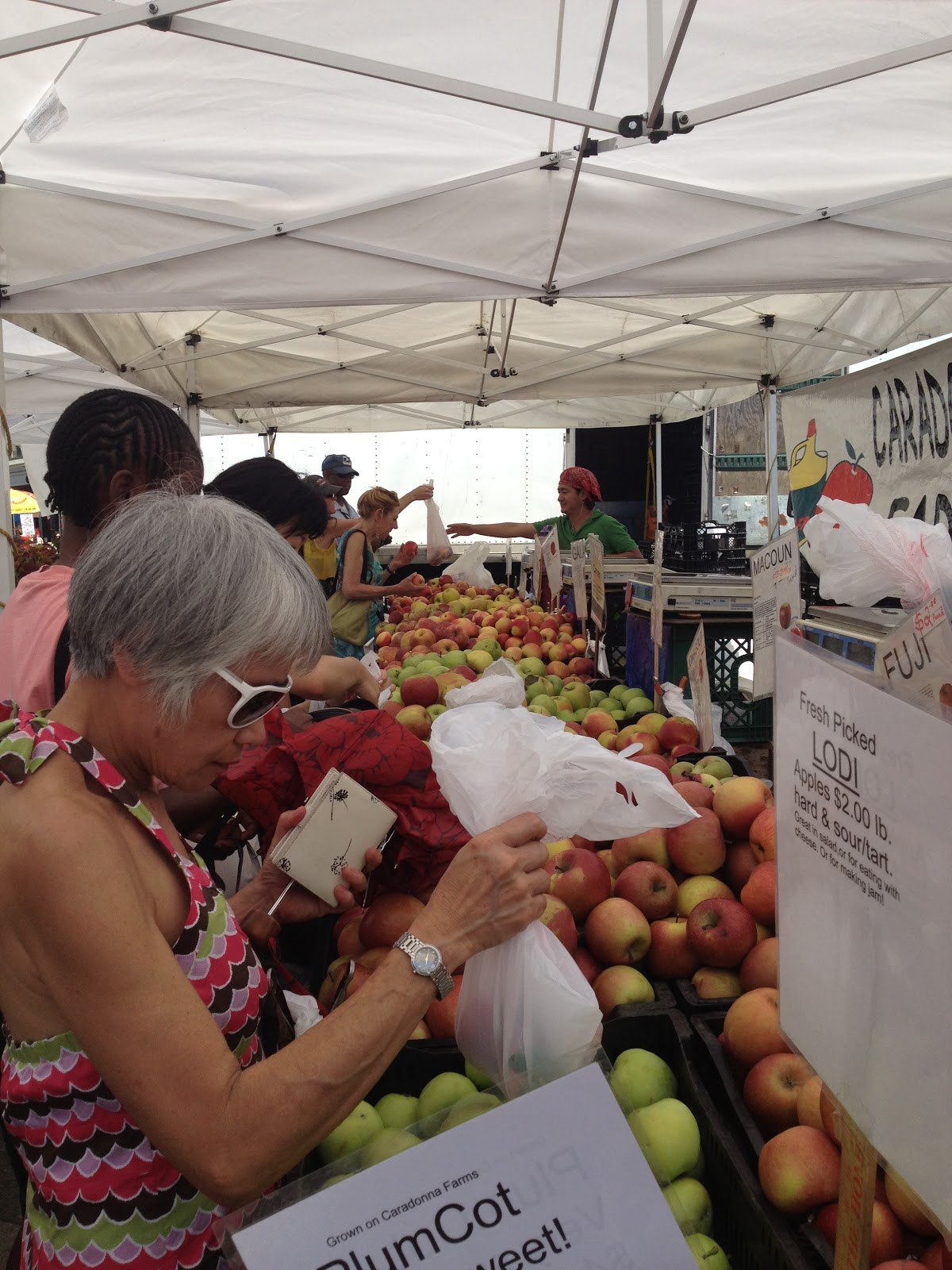 New Yorkers seeking in Union Sq. Green Market |
Recent Comments